


To better understand the chemicals in the ceramics industry, we need to understand the raw materials. In the following article, CMM Vietnam will introduce 4 indispensable raw materials for the production of decorative glazes for ceramic tile products.

1. Nepheline
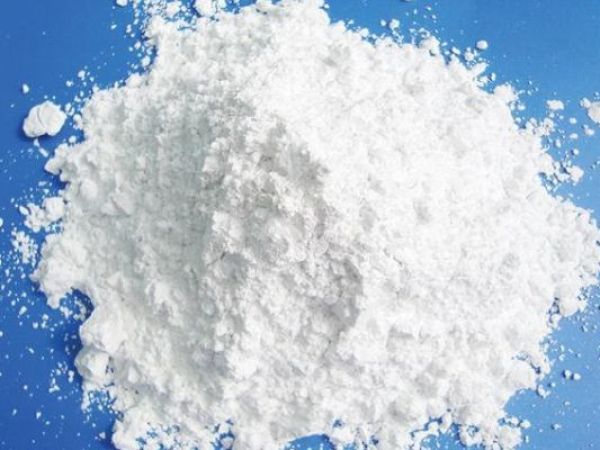
First of all, we have to mention Nepheline, which is a special type of Sodium feldspar. In terms of appearance, this is a type of stone that is opaque white, soft and easy to crush.
The composition of Nepheline includes Na2O. Al2O3. 2SiO2, Na2O content ≥ 12% is an important component for nepheline to have a low melting point and a fairly high coefficient of thermal expansion.
The role of Nepheline in the base glaze will reduce the viscosity of the glaze, in the engobe to adjust the coefficient of thermal expansion of the glaze.

2. Glaze frit
Glaze frit is the main ingredient in the glaze mix, they are produced from raw materials. After being smelted at high temperature and converted into liquid phase, it is then quickly cooled to room temperature.
Frite Classification
Frite is divided into 4 types according to their appearance. Each type will be applied specifically to each product. Specifically, the 4 types are as follows:
– Clear enamel frit: When observing the surface, the enamel will be seen to be almost glass-like in transparency.
– Opaque enamel frit: When observing the enamel surface, the enamel will be seen to be bright white and highly glossy but not as see-through as glass.
– Matte enamel frit: When observing the enamel surface, the enamel surface will feel slightly porous, opaque white, low gloss and also not as see-through as glass.
– Adjustable enamel frit: There are 2 types of adjustable enamel frit.
Glaze frit adjusts the melting temperature of the enamel. Usually, each type of base enamel when purchased usually has at least 2 types of frit. One type has a high melting point and the other has a low melting point. When used, people combine the two types of frit in a certain ratio to have a melting point suitable for the firing temperature of the body. The type of frit used in a lower ratio is often called an adjusting frit and is mainly used to adjust the base glaze temperature.
The glaze frit adjusts the coefficient of thermal expansion of the glaze. Usually, people use frit to adjust the engobe glaze, which is the intermediate glaze layer between the body and the base glaze and is also the intermediate substance that helps the base glaze to fit the body.
Some properties of glaze frit:
– Coefficient of thermal expansion of glaze frit (COE)
In the production of ceramic tiles, choosing a glaze frit with a suitable COE plays a very important role in adjusting the flatness of the product after firing
– Melting temperature of the frit (melting point). This is the temperature at which the glaze frit begins to soften. Too low a melting point will prevent the escape of gas in the bone during firing, making the product prone to blistering and boiling of the glaze. Too high a melting point will make it more difficult to adjust the gloss of the glaze.
– Flow range: is the temperature range from when the glaze begins to soften to when the glaze flows smoothly. The wider the melting range of the glaze frit, the easier it is to adjust the kiln.
– Other properties such as gloss, surface tension, opacity, etc. also greatly affect the selection of glaze frit in production.
3. Ziecol oxide and Ziecol silicate (ZrO2 and ZrSiO4)
These raw materials have a very characteristic property of being very white even when fired at high temperatures. Therefore, Ziecol is mainly used in glazes to increase the whiteness of the glaze. Another important effect is that they are used quite a lot in the engobe glaze (base glaze) to make the base glaze opaque and not see-through to have the following effects:
- As the background color for the product when using the base glaze as clear glaze, because the clear glaze is a transparent glass layer, the color of the base glaze will be the color of the product when using the base glaze as clear glaze.
- The brick bone can be red or dark brown, so the base glaze with Ziecol will have the effect of covering the color of the bone so that the glaze can be used and the color decoration on the product is as beautiful as when using the product bone as white bone.
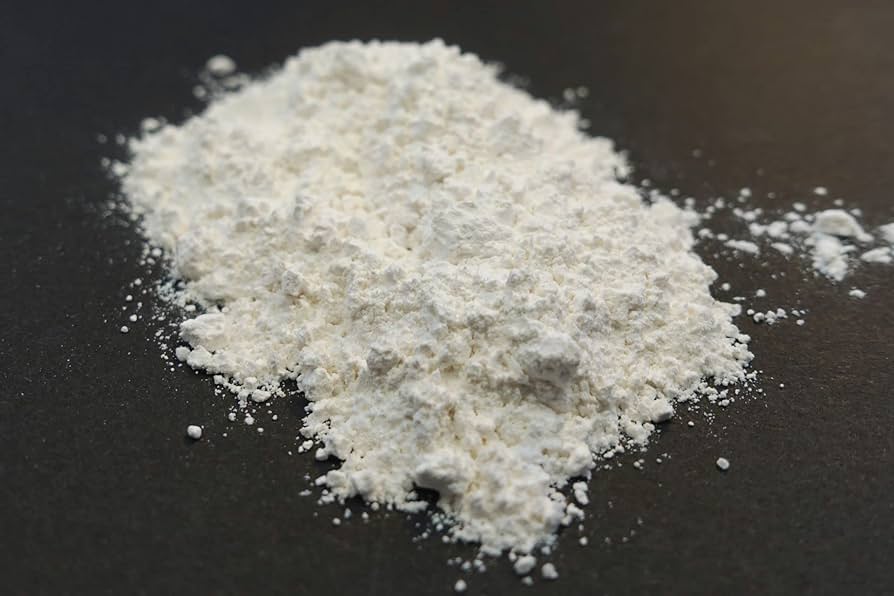
Zirconite (Zirconium Silicate) - Chemicals in the ceramic industry
This type of raw material is mostly imported from countries such as Japan and Germany, which are countries with high quality raw materials, high whiteness but very expensive. Our country has also produced this raw material in the Central region, but the quality is still very poor, so it has not been used much.
4. Aluminum oxide Al2O3
Depending on the content, Al2O3 has different effects in the glaze. With a small content and good reaction conditions with other oxides, Al2O3 acts as a fluxing agent, making the glaze clear and shiny.
Increasing the Al2O3 content increases the melting temperature and viscosity of the glaze, reduces the even flow of the glaze on the product body, it has the effect of expanding the melting temperature range of the glaze, lowering the coefficient of thermal expansion, increasing the thermal resistance, mechanical resistance and chemical resistance of the glaze. High Al2O3 content increases opacity and reduces the crystallization tendency of the glaze. Al2O3 is added to the glaze according to kaolin, clay, feldspar, in some cases Al2O3 Oxide or Al2O3 hydroxide is also used.
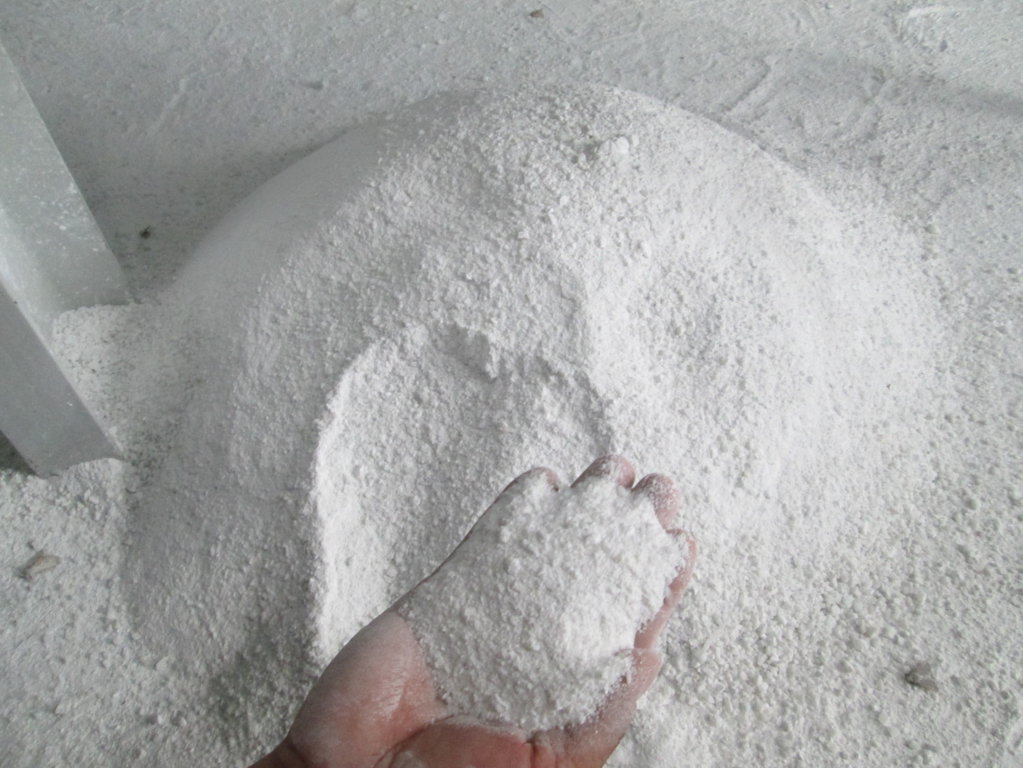
Aluminum oxide Al2O3
Supply source: Imported from European countries, Korea, Japan and Domestic: Currently in our country there are 2 factories producing aluminum oxide and aluminum hydroxide, which are Nhan Co Alumina Factory - Dak Nong province, and Tan Rai Alumina Factory - Lam Dong province, belonging to Vietnam National Coal - Mineral Industries Group.
Above are the necessary chemicals in the production of decorative enamel in general and chemicals for the ceramic industry in particular. Hope to provide useful information for our readers.